
A monthly electricity bill tells a business what it owes. By itself, it gives limited detail about when energy was used, which equipment contributed to the total, or why one branch consumed more than another.
Energy monitoring helps turn that total into questions a facilities team can investigate. Our approach is to understand the premises, identify the cause of unusual consumption, take an appropriate action and then measure what changed.
For a large building or a business with several branches, that visibility can support better operating decisions. The amount saved depends on what the data reveals and which improvements the business actually implements.
Understand the premises before choosing the remedy
Different sites have different energy patterns. Refrigeration, air-conditioning, lighting, production equipment and tenant loads can each contribute, depending on the business.
A higher bill does not automatically identify waste. Longer trading hours, more production, weather, additional equipment or a change in occupancy may explain a difference. Monitoring is useful when electrical measurements are considered alongside that operating context.
Start by documenting the main loads, opening hours, equipment schedules and available utility history. Then decide what needs to be measured to answer the business’s questions.
Look for patterns that deserve investigation
Depending on the meter, sampling interval and installation scope, energy records can help teams investigate patterns such as:
- A load continuing outside its intended operating hours.
- An increase in consumption following an equipment or schedule change.
- One circuit contributing a large share of a premises’ energy use.
- A branch behaving differently from comparable stores.
- Changes in the building’s normal overnight or closed-period demand.
These are prompts to investigate. A measurement alone does not establish that equipment is faulty or that a load can safely be removed. Required services such as refrigeration and security need to remain part of the operating plan.
Compare branches on a useful basis
Ranking stores by their total bill can be misleading. A larger store open for longer hours may reasonably use more electricity than a smaller branch.
Useful comparisons may include energy per trading hour, energy per unit of floor area, or consumption against each branch’s own earlier baseline. Which comparison makes sense depends on the business and the available records.
As a measurement principle, ENERGY STAR’s benchmarking guidance describes comparing a building with its past consumption, similar buildings or a reference performance level. For an operator, the practical aim is to identify a site worth investigating and learn from sites operating well.
Put the opportunity into numbers
Consider a hypothetical example: an investigation identifies an unnecessary 5 kW load running for 6 hours a day, on 26 days in a month.
The associated energy is 5 × 6 × 26 = 780 kWh per month. If the load can appropriately be removed during those hours, that gives the team a measurable energy-reduction opportunity.
This is an illustration, not an estimate for KK Mart or a promised result for your premises. The financial effect must be assessed using the actual bill, applicable tariff and any demand-related charges. Monitoring, installation and ongoing operating costs also belong in the decision.
Correct the cause, then verify the result
Once the team understands the cause, an action might involve an equipment schedule, maintenance, operating practice or a targeted upgrade. Assign responsibility and record when the change was made.
Afterward, compare energy use over a representative period, allowing for relevant differences in weather, operating hours or production. Continue monitoring to check whether the improvement persists.
This is consistent with the structured, continuing energy-improvement approach described by the U.S. Department of Energy’s 50001 Ready programme. A useful monitoring project includes a review-and-action process alongside the equipment and dashboard.
Where ID IOT and Splinergy fit
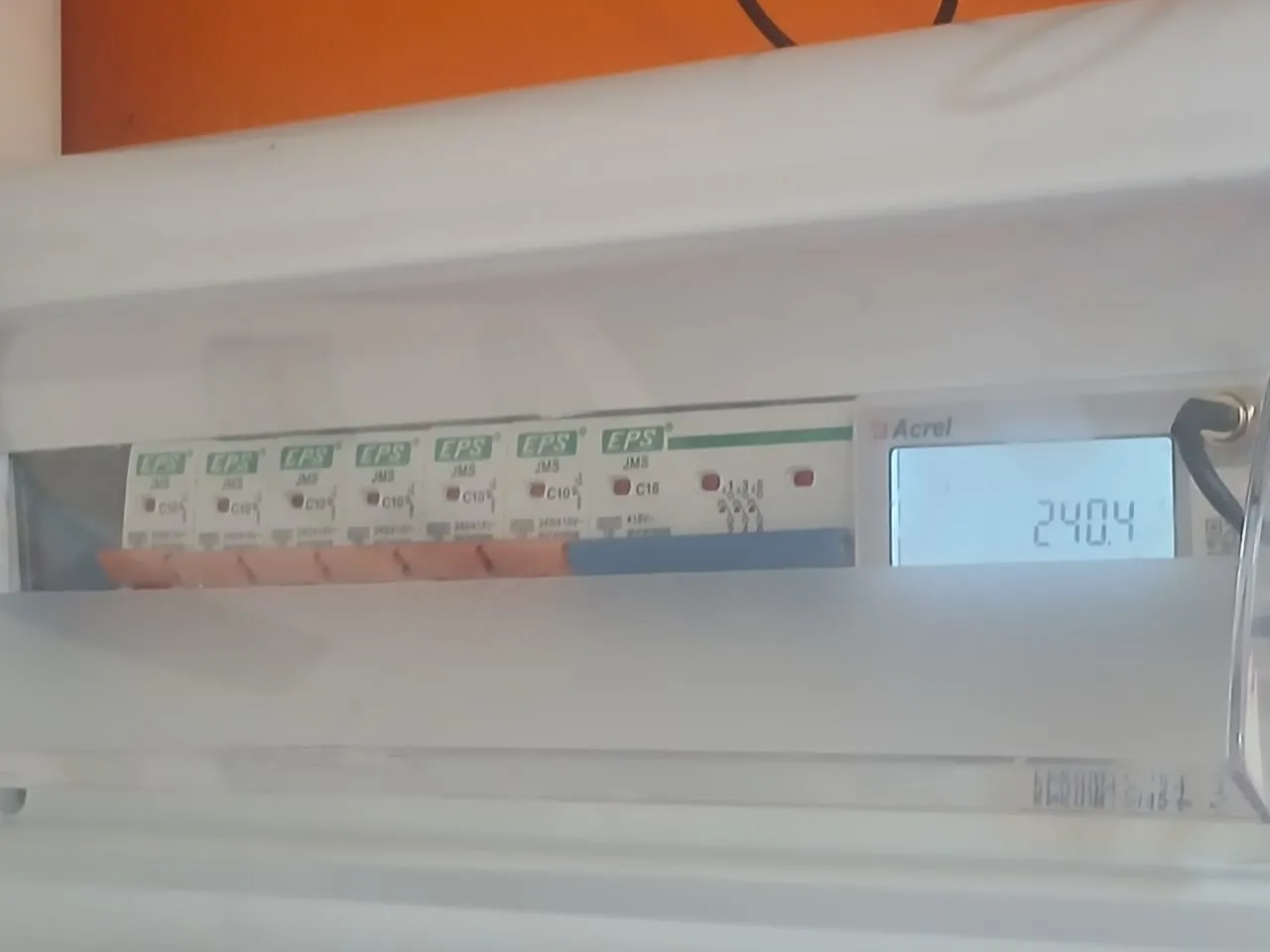
ID IOT installed energy measurement at KK Mart in 2026. The project demonstrates the physical metering installation; a separate energy review is needed to establish any saving.
For wider monitoring requirements, Splinergy connects compatible metering hardware with an online platform. Its published FAQ includes monitoring-only use without tenant billing. Device selection, connectivity, data detail and installation scope should follow the questions the operator needs answered.
For an initial discussion, share the number of premises, available bills, operating hours, principal equipment and whether you need whole-site or circuit-level visibility. Discuss energy monitoring with James. Standalone electrical installation works can be discussed with Janson.
Sources
Technical and product references were reviewed on 16 October 2026: ENERGY STAR benchmarking, 50001 Ready, and the Splinergy FAQs.